

Most movie genres today have set formulas, established frameworks that stories evolve and develop within, ultimately being defined by how they utilize and subvert set tropes within the genre. This is especially true of mystery cinema. While the allure of a perplexing puzzle is always appealing, many movies within the genre are derivative of what has come before them, playing with set structures and styles that have been around for decades.
This isn’t to say these films have been lazy, however. In fact, they have taken inspiration from some of the greatest and most iconic mystery movies of all time from any genre. Ranging from the defining hits of film noir’s glory days in the midst of Old Hollywood to trend-setting and suspenseful serial killer flicks, and even to certain spins on whodunit crime capers, these mesmerizing masterpieces all set a blueprint that many films have followed since.
10
‘The Naked City’ (1948)
It may be something of a forgotten gem today, but The Naked City is one of the most pivotal and pioneering pictures in the history of crime cinema by virtue of being the first police procedural drama. Additionally, it was also one of the first major commercial productions to be shot entirely on location, conjuring a rich atmospheric film noir allure with the streets and landmarks of New York City and its implementation of documentary-style cinematography to further amplify its sense of realism.
The story itself is relatively typical despite its innovative spin on the genre, presenting a step-by-step investigation into the murder of a former supermodel, following the detectives as they piece together details of the victim’s life through interviews and the gathering of evidence. Whatever its narrative lacks in punch, The Naked City makes up for with its groundbreaking and eye-catching approach. It’s one of the first films to capture the essence of a city like an active character rather than merely as a background setting.
9
‘Psycho’ (1960)

Sir Alfred Hitchcock is lauded today as being the Master of Suspense, a director with an unrivaled command of cinematic tension and anxiety-inducing bravado. While he earns this reputation, it can be said that it somewhat overshadows just how innovative his techniques and stories have proven to be. One of his most pioneering films is his defining masterpiece, Psycho, a relentlessly nerve-rattling psychological horror that follows Marion Crane (Janet Leigh) as she flees with money from her workplace, and the ensuing investigation into her disappearance after she is murdered.
It has often been referred to as the origin of slasher cinema, with many films in the horror subgenre replicating its fine art of a murder scene; the precise balance of tension and terror as the victim is targeted and attacked. Likewise, Psycho also initiated the dramatic tone surrounding psychologically complex villains, with many mystery movies since replicating its one final twist that exposes a horrific truth of the culprit. A mixture of horror, thriller, and mystery, Psycho has had a lasting effect on all three genres and, indeed, cinema at large, serving as a boundary-pushing triumph of depravity and death that still stands as one of the most iconic pictures of all time.
8
‘Knives Out’ (2019)
Released in 2019, Knives Out is by far the most recent film to feature on this list (by almost 50 years to be precise). As a new-age spin on whodunit mystery fun, many would argue it isn’t so much a new blueprint as it is a refreshed update of an old one. This point definitely has merit, especially as the film leans on trademark tropes like the eccentric genius detective, the contained setting, the litany of suspects, and the many red herrings and plot twists. However, Rian Johnson’s magnetic masterpiece does break new ground with its strong use of comedy and razor-sharp skewering of wealth and status.
Following Benoit Blanc (Daniel Craig) as he investigates the murder of a successful author, in which all his relatives have a clear motivation to want him dead, Knives Out is as much a critique of the desperate amorality of the rich and powerful as it is a thrilling murder mystery laced with frantic fun. Its star-studded cast, vibrant use of color, and meticulous detail—while not new tropes—have been popularized anew as well off the back of its commercial success.
7
‘Citizen Kane’ (1941)

With its technical innovation—especially regarding cinematography and set design—and its bold storytelling, Citizen Kane is regarded by many to be the best and most important film ever made. While it is known more for its dramatic might and groundbreaking impact, the 1941 classic still flaunts a compelling central mystery as it follows a reporter’s efforts to unearth the meaning of “Rosebud,” the final utterance of legendary news magnate Charles Foster Kane (Orson Welles) before he died.
Rejecting traditional storytelling, Citizen Kane famously employs a non-linear narrative, flashing back to pivotal moments in Kane’s journey as the journalist interviews key figures from the man’s life, trying to grasp any indication as to what “Rosebud” refers to. The picture is renowned for pioneering many new techniques in filmmaking, from deep-focus cinematography to low-angle shots and even ceilinged sets, but the impact it continues to have on cinematic storytelling should never be overlooked. Its time-jumping, puzzle-like structure has become quite common in mystery cinema, establishing a framework of misinformation and manipulation that keeps viewers on the edge of their seats.
6
‘And Then There Were None’ (1945)

Agatha Christie’s work had been adapted for the silver screen many times prior, but the release of And Then There Were None in 1945 is the first to truly capture her stories’ tone of intrigue and mystique, a feat that saw it effectively pioneer the whodunit subgenre for cinema in the process. It follows eight strangers invited to a mansion on a small English island who, when they start getting killed one by one, find themselves in a desperate race to identify the killer.
With its slightly surreal and high-minded concept, eclectic array of characters, and its enticing and isolated setting, And Then There Were None established many defining tropes that have become essential hallmarks of whodunit cinema. While it is of its time, it also features a sharp psychological suspense, especially with its premise indicating that the killer must be among the group of central characters. It conjures a sense of distrust and paranoia that has been recreated in everything from horror classics like The Thing to Western thrillers like The Hateful Eight, and, of course, even to modern mysteries like the aforementioned Knives Out and its sequels.
5
‘Rear Window’ (1954)

Another Hitchcock hit that presented a new horizon for mystery mayhem, Rear Window presents a masterclass in controlled suspense and thematic exploration. It follows maimed photographer L. B. Jeffries (James Stewart) as his macabre hobby of nosing out his window leads him to suspect one of his neighbors has committed a murder. Tension gradually builds as he enlists the help of his girlfriend and nurse to investigate the possibility, culminating in not only a timelessly brilliant thriller, but a sneakily innovative mystery as well.
It stands as the first single-location mystery movie, with the story never spanning beyond the confines of Jefferies’s Greenwich Village apartment complex. It is a feat made possible by the astonishing set design, which ensures the courtyard and surrounding apartments have a radiant life and lavishness, and Hitchcock’s sublime direction, imbuing the effervescent location with a contained tension. The idea has been copied numerous times since, in everything from light-hearted whodunits to piercing dramas.
4
‘M’ (1931)

Serial killer drama has become something of a trend in modern society, with everything from true-crime tales to twisted psychological thrillers feeding the sensationalism of humanity’s most deranged and depraved souls. Interestingly, the film that laid the groundwork for much of the entertainment about such criminals audiences enjoy today was released almost 100 years ago. Fritz Lang’s German masterpiece, M, thrives as an in-depth exploration of a serial killer’s psychology and how such crimes impact a community, a criminal landscape, and the police force.
As child killer Hans Beckert (Peter Lorre) remains at large, law enforcement elevates their numbers in response to the public outcry, causing local gangsters to launch an investigation into the murders as the heightened police presence interferes with their business. A picture of monumental significance in the context of psychological thrillers and mystery suspense, M has set a platform for many films exploring serial killers and their crimes in the past century. It also proved to be groundbreaking for how it used sound and its implementation of “In the Hall of the Mountain King” as a musical leitmotif.
3
‘Murder on the Orient Express’ (1974)

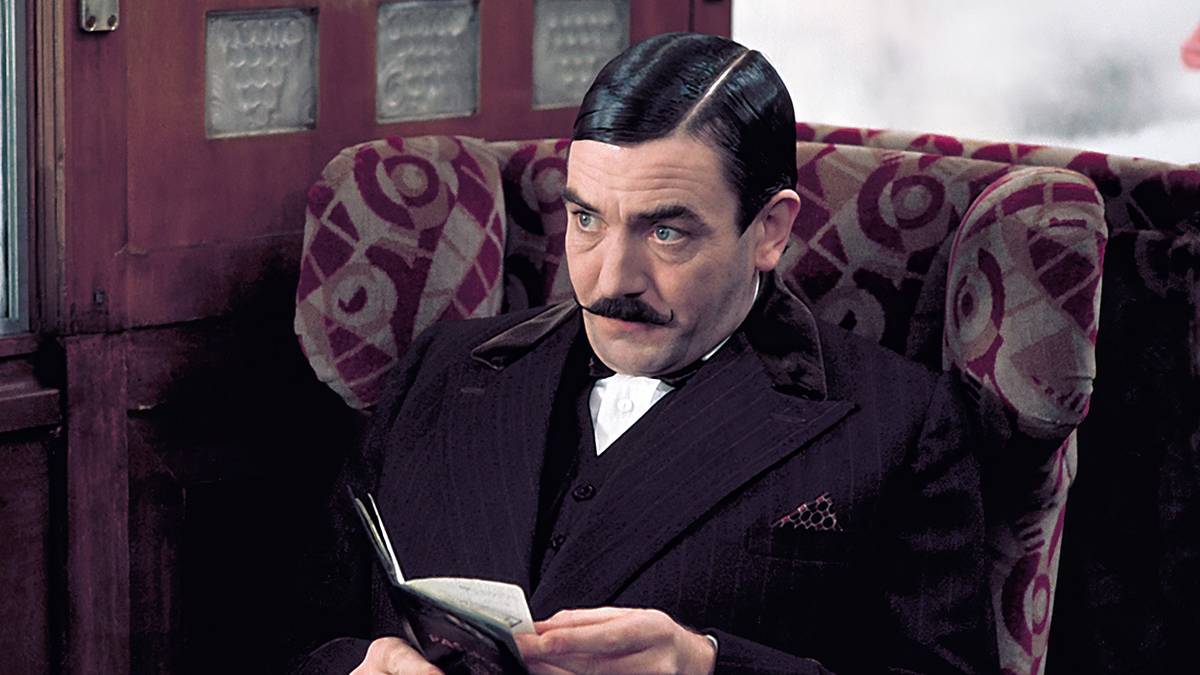
While the aforementioned And Then There Were None is widely considered to be the first true whodunit in film, 1974’s Murder on the Orient Express is very much the movie that reframed the subgenre as many viewers know it today. Another Agatha Christie adaptation, it follows Hercule Poirot (Albert Finney) as he investigates the murder of an American gangster aboard the Orient Express while the train is stranded due to a snowstorm.
Director Sidney Lumet wanted to craft a sense of spectacle that defied the hard-edged style of 1970s Hollywood cinema and reconfigured the genre’s very nature. He achieved this goal by amassing an incredible ensemble cast—including, but not limited to, Ingrid Bergman, Sir Sean Connery, Lauren Bacall, and Richard Widmark—and presenting the story with lavish visuals and immersive, opulent production design to conjure a captivating air of elegance. Such an approach didn’t just renew the intoxicating allure of whodunit excitement; it also revitalized mystery cinema at large, establishing a blueprint that has been used consistently ever since.
2
‘Chinatown’ (1974)

Cited as being among the greatest screenplays ever written, Chinatown redesigned the enigmatic intrigue of film noir anew with its razor-sharp story defined by structural precision and impressionable style as well as its analysis of systemic corruption. It follows L.A. private eye Jake Gittes (Jack Nicholson) as he is hired under false pretenses to investigate the personal activities of Hollis Mulwray (Darrell Zwerling), the chief engineer at the Department of Water and Power. When Mr. Mulwray is murdered, Gittes finds himself entangled in a web of corruption, power, and deceit, with only Mulwray’s widow, Evelyn (Faye Dunaway), presenting as an ally.
Robert Towne’s meticulously plotted story works in tandem with Roman Polanski’s cynical view of Los Angeles to craft the definitive neo-noir masterpiece, an elaborate and winding mystery steeped in political subterfuge and realized with a mighty visual divinity. In the context of mystery cinema, Chinatown rejuvenated the allure of noir drama, establishing the blueprint for all modern spins on the genre with its intricacies, thematic wrath, and its real-world pessimism. In the context of the medium at large, however, Chinatown presents a faultless template for screenwriters, regardless of the genre they are working in.
1
‘The Maltese Falcon’ (1941)

In mystery cinema, or, indeed, in all film, there is hardly a movie as iconic as The Maltese Falcon. Its subversion of detective stories following noble cops whose investigations yield clear-cut and cohesive resolutions has proven timeless, imbuing the genre with a hard-boiled grit that has become the norm in crime mystery stories for the past 85 years. Based on Dashiell Hammett’s 1930 novel, it follows private eye Sam Spade (Humphrey Bogart) as his search for an immensely valuable statuette embroils him in the San Francisco underworld and the schemes of three nefarious crooks.
In addition to its hard-edged tone and confounding complexity, The Maltese Falcon also set a new trend with its distinct visual style. John Huston’s use of sparse lighting, deep-focus cinematography, and dark, tightly composed shots conjures a sense of richly stylized suspense that has made noir one of the most visually distinguished genres in cinema. When one also considers its character work—Sam Spade’s anti-hero qualities and the piercing decadence of Mary Astor’s femme fatale Brigid O’Shaughnessy—The Maltese Falcon is undeniably the greatest influence on mystery cinema, presenting a template of style and story that remains firmly intact almost a century later.
Source link
